DETECTION METHOD
CCTV drain inspection on school sites
Inspect the inside of drainage pipework for damage and obstructions.
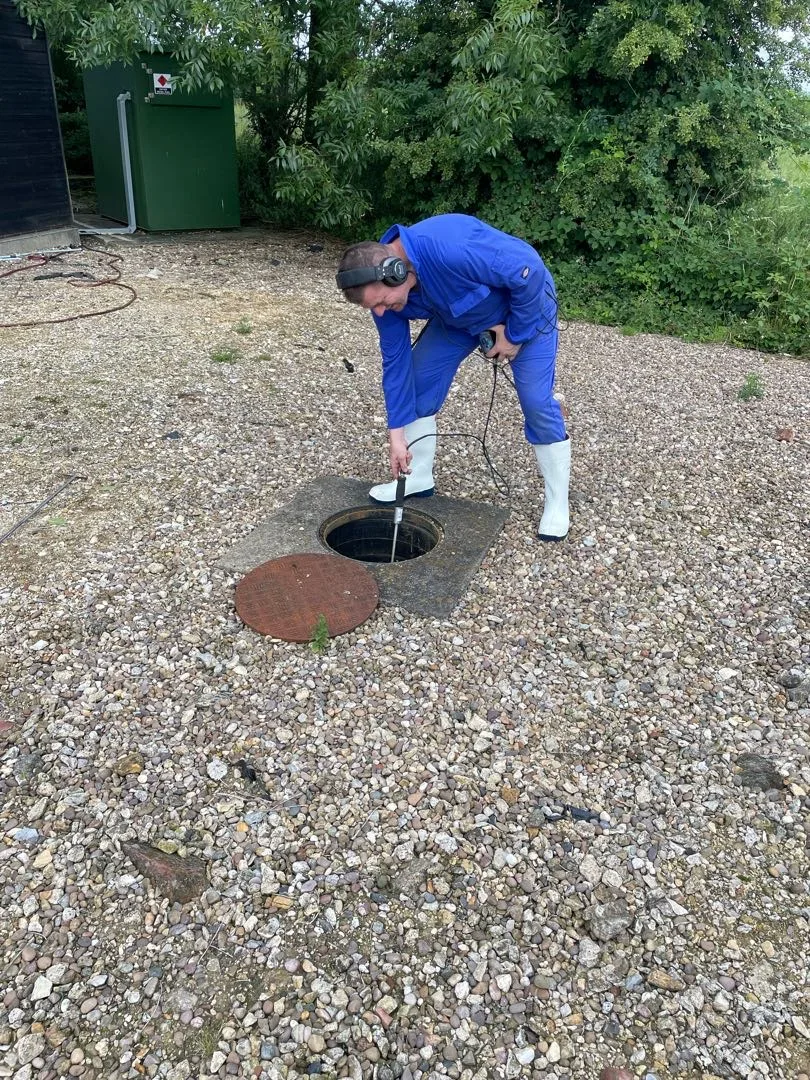
A CCTV survey runs a camera through school drainage to record condition, locate defects and produce a plan of runs the estates file usually does not have.
- What it detects
- Blockages, root ingress, collapses, displaced joints and misconnections in drainage
- Invasiveness
- Non-invasive
- Works through
- Not applicable; the camera travels inside the pipe
- Constraint on a school site
- Open chambers and children do not mix, so the work needs exclusion or out-of-hours access
- When it is used
- Recurring blockages, wet ground that is not a supply leak, or before building work
What a drainage survey produces
A camera on a rod or a tractor runs from chamber to chamber recording the pipe's interior. Defects are coded against a standard classification, located by distance from the chamber, and reported with a still image.
The survey also produces a plan. A sonde in the camera head can be located from the surface, so runs with no chambers can be traced and drawn. On a school site with three generations of extensions, that plan is frequently the first accurate drainage record the estate has ever had.
When a school needs a drainage survey rather than a leak survey
- The same run blocks repeatedly, which almost always means a physical defect rather than misuse
- Wet ground that follows the school day or heavy rain, rather than running overnight
- Before excavation or a new building, so the drainage is known before it is disturbed
- After a subsidence or ground movement issue, where a drain may be both cause and casualty
If the water meter is moving overnight with the site closed, that is a pressurised supply leak and a drainage survey will not find it.
What it means on a school site specifically
The practical issue is open chambers on a site full of children. Every chamber that is lifted has to be attended or properly barriered, which is why most schools schedule this work outside the day.
Kitchen drainage carries its own constraint. Fat and food waste blockages are common in school kitchens, and any work through a kitchen gully has to respect the kitchen's hygiene regime and cleaning schedule.
What the survey needs from the school
- Access to chambers, including any buried under later surfacing, which may need locating first
- A window with children off the affected area, or a properly managed exclusion zone
- Vehicle access for the survey unit to get reasonably close to the runs
- Any existing drainage information, including where the previous contractor said the blockage was
Questions schools ask
Can a CCTV survey find a water leak?
No. Drainage is not pressurised, so it does not leak in the way a supply pipe does, and the camera is inside the drain rather than the water main. A supply leak is found at the meter and located acoustically or with tracer gas.
Some of our manholes are buried under tarmac. Can you still survey?
Yes, though they have to be located first, which is a service location exercise. Where a chamber cannot be recovered, the run can often be surveyed from the chamber either side and the missing section traced with a sonde.
How long is a survey report valid?
It records the condition on the day. For planning purposes a report stays useful for years, but a run that was showing early root ingress will be worse next season, and that is exactly the kind of thing a dated report lets you track.
Sources for this page
Last reviewed . How this site sources and dates its figures.