DETECTION METHOD
Moisture mapping for leaks in school buildings
Build a picture of where moisture is present and how it is spreading.
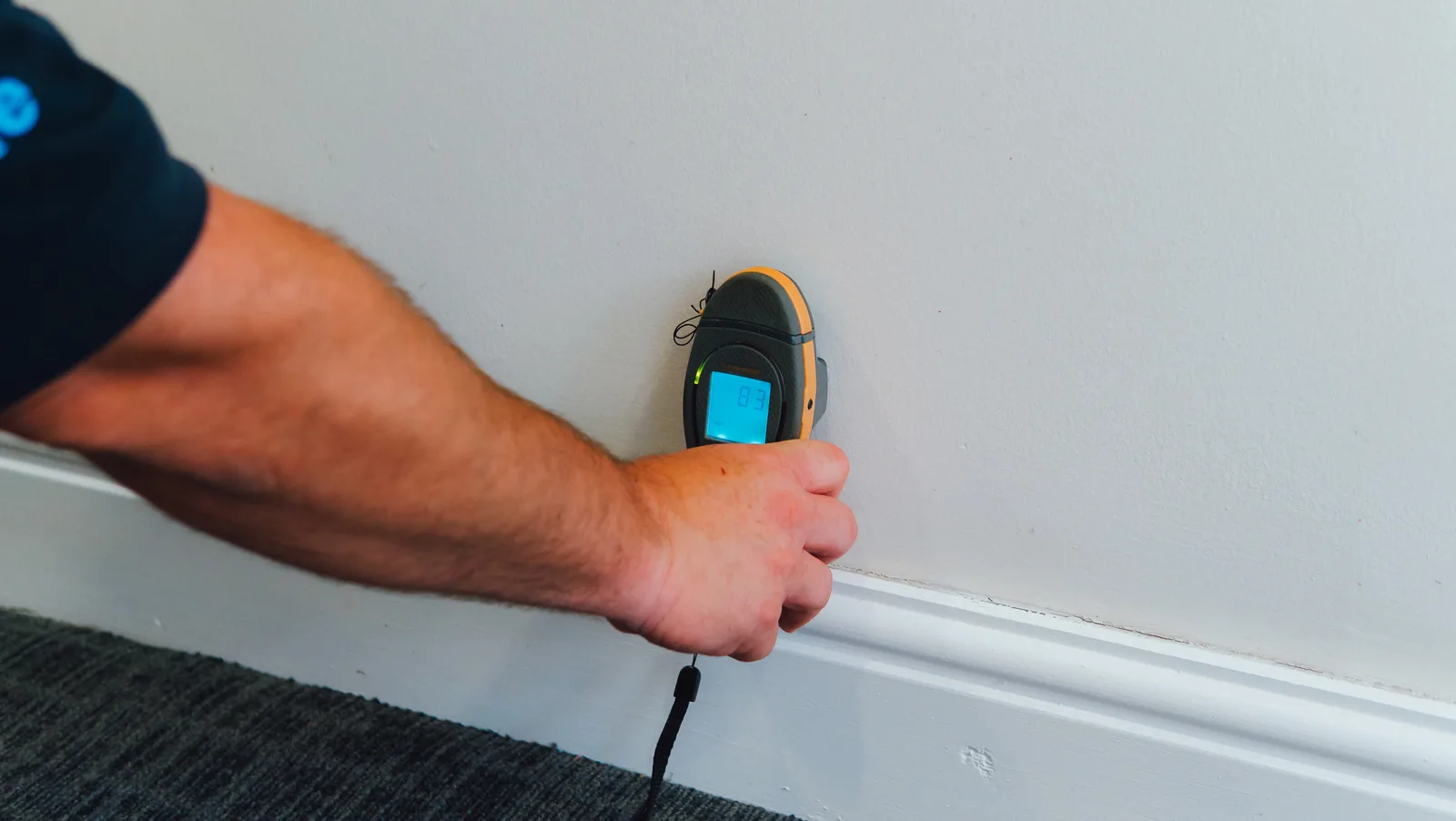
Moisture mapping measures water content across a surface so the true extent of wetting is recorded, which is usually much larger than the visible stain.
- What it detects
- The extent and severity of water in building fabric
- Invasiveness
- Non-invasive
- Works through
- Surface finishes, to a shallow depth
- Constraint on a school site
- Needs the affected area accessible and clear, and needs repeat visits to show drying
- When it is used
- Establishing the scope of damage and monitoring drying after a repair
What moisture mapping measures
A moisture meter reads the electrical properties of a material, which change with water content. Taking readings on a grid across a wall, floor or ceiling produces a map of where the water is and how much there is, rather than a single number at one point.
Two types are used together. A non-invasive meter reads a shallow depth through the surface, and a pin meter reads at a specific point and depth where a confirmed reading is needed.
Why the extent matters more than the reading
A stain shows where water reached the surface and evaporated. It does not show where the water is now. Plaster and screed wick moisture well beyond the visible mark, which is why a repair scoped to the stain leaves wet material behind a new finish.
In a school this matters commercially as well as technically. A mapped extent is the difference between redecorating one wall and redecorating it twice.
What it means on a school building specifically
Schools need the record more than most buildings do, because the repair is usually scheduled for a holiday months after the leak, and by then the evidence has faded. A dated moisture map taken at the time is what supports an insurance claim, a funding bid or a conversation with a contractor about scope.
It is also the way to close out a job honestly. Repeat readings after drying, on the same grid, show whether the fabric is actually dry before anything is made good.
What the survey needs from the school
- Access to the affected area with furniture and displays moved back from the wall
- A note of when the leak was found and what has been done since
- Agreement to repeat the readings later, which is what makes the first set useful
Questions schools ask
Can a moisture meter tell us where the leak is?
Not on its own. It tells you where the water has spread, which narrows the search and sometimes points clearly uphill towards a source, but the source itself is found by pressure testing, tracer gas or a water test.
How long does a school wall take to dry?
It depends on the material, the thickness and the conditions, and the honest answer is that you measure it rather than predict it. That is exactly why the readings are taken on a grid and repeated: drying is evidenced, not assumed.
Is this the same as a damp survey?
It overlaps. A damp survey looks for causes including rising and penetrating damp and condensation. Moisture mapping is a measurement technique used within that, and used on its own to scope and monitor water damage from a known leak.
Sources for this page
Last reviewed . How this site sources and dates its figures.