SCHOOL LEAK DETECTION
Sports pavilion and changing block leak detection
Trace water loss on long supply runs and in showers and changing facilities.
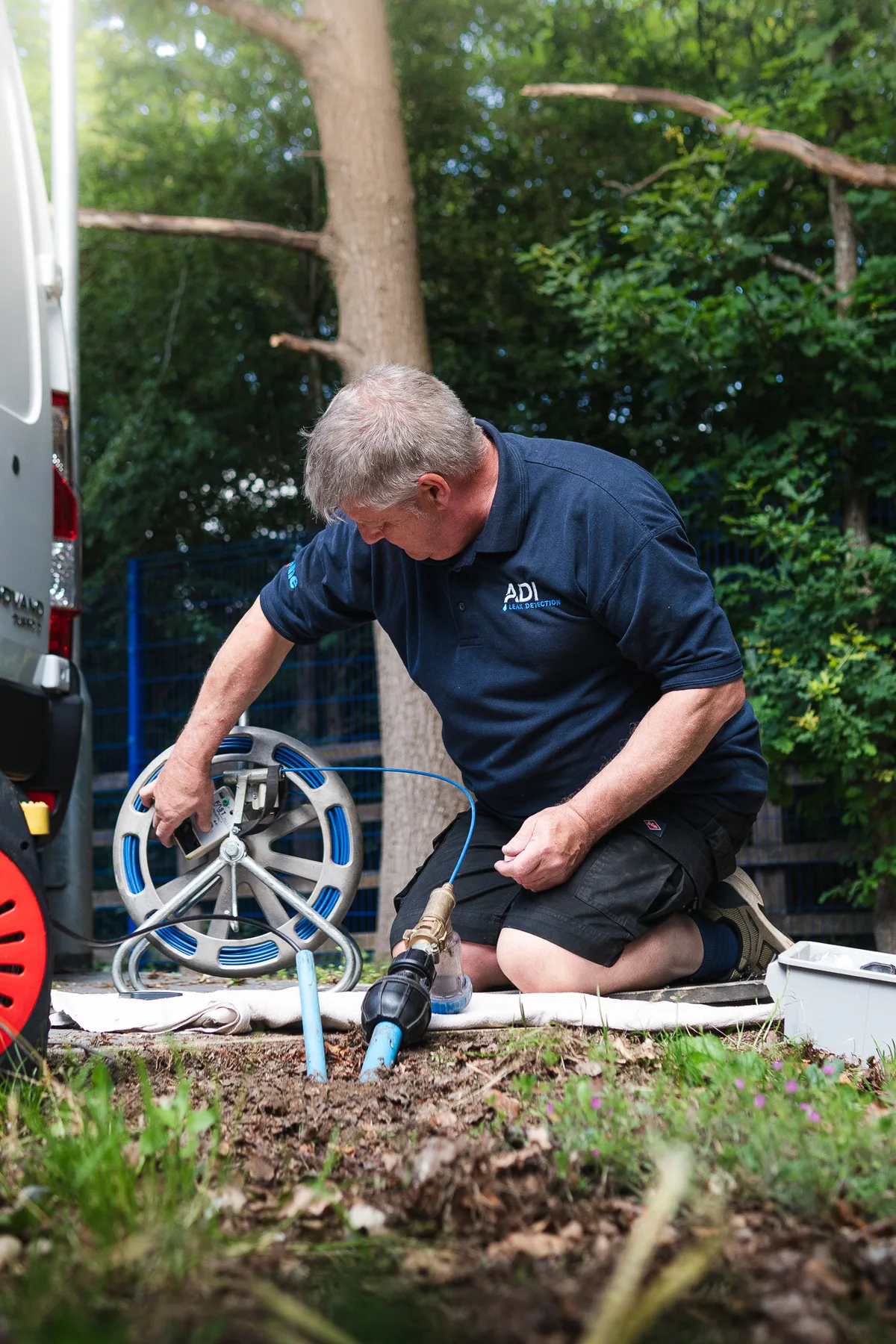
Changing blocks lose water through shower valves and a long buried supply, and detached pavilions are often left pressurised for months when nobody is using them.
WHAT TO LOOK FOR
Leak symptoms and common faults
- Non-concussive or push-button shower valve failing to close
- A shower that runs on after the button releases, or never stops
- Long buried supply to a detached pavilion
- Overnight flow that continues when the pavilion is locked
- Frost damage in an unheated seasonal building
- A sudden large loss discovered at the start of a season
- Failed thermostatic mixing valve on a shower bank
- Continuous discharge to the drain with no shower in use
- Buried pipework under a tiled changing room floor
- Persistently damp grout and staining on the ceiling below
Where the water goes in a changing block
A changing block is the highest-intensity water use on a school site, concentrated into a few short periods a day. A bank of eight or twelve showers, a row of basins, and often a boot wash outside. The pipework is sized for that peak and spends the rest of the day idle.
That idle time is what makes the block easy to test. Between the last lesson and the first, nothing in a changing block should draw water at all.
The detached pavilion problem
A pavilion on the far side of the field is served by a long buried run, is used for part of the year, and is not visited daily. Every one of those makes a leak last longer. A burst inside a locked pavilion in November may not be found until March.
The prevention is simple and almost nobody does it: isolate and drain the pavilion supply when the season ends, and put isolating it into the seasonal checklist alongside turning off the heating.
How a changing block leak is located
- Take a meter reading with the block locked and repeat it the next morning, which confirms whether anything is running
- Isolate the block and repeat, separating the buried supply from the internal pipework
- Check every shower valve and mixing valve individually, which is where the majority of changing block losses are
- Where the loss is internal and hidden, use thermal imaging on hot runs and tracer gas on isolated cold sections
- Where it is on the buried supply, trace and correlate along the run from the main building to the block
Working around fixtures and PE timetables
Changing rooms are in use for most of the teaching day and often into the evening for clubs and lettings. The realistic windows are before school, after clubs, and holidays.
Where the leak is under a tiled floor, the repair is a bigger job than the detection, because reinstating a wet-area floor properly means removing and replacing tiling and tanking rather than patching it.
Arrange a school leak detection survey
School leak survey questions
Our showers run on after the button is released. Is that wasting much?
More than most schools expect. A non-concussive valve that fails to close runs continuously, and a bank of them running unnoticed overnight and through a holiday adds up to a very large volume. They are cheap to replace and easy to check.
The pavilion is only used in summer. Should we isolate it?
Yes, and drain it. A building that sits pressurised and unvisited for months is where an unnoticed burst does the most damage, because nobody is there to hear it and nobody checks the meter against a building that should not be using anything.
We think there is a leak under the changing room floor. Do we have to lift the tiles?
Not to find it. Thermal imaging identifies a hot water leak under a floor, and tracer gas locates a cold one, so any tiling that comes up is at the marked position rather than exploratory.
Sources for this page
Last reviewed . How this site sources and dates its figures.